




01 Nov An Election Day Rescue: Volunteer Divers Remove Large Ghost Net Off Tel Aviv Coast
Thanks to a real-time report submitted through SPNI’s SeaWatch mobile app, a major marine conservation operation succeeded in removing a massive ghost net entangled around the breakwater between Tel Aviv’s Trumpeldor and Jerusalem beaches.
Organized by SPNI’s Blue Half marine team, alongside volunteer divers from the Shamir Diving Club, the operation took place at dawn on Israel’s Election Day.
Discovery off Trumpeldor Beach
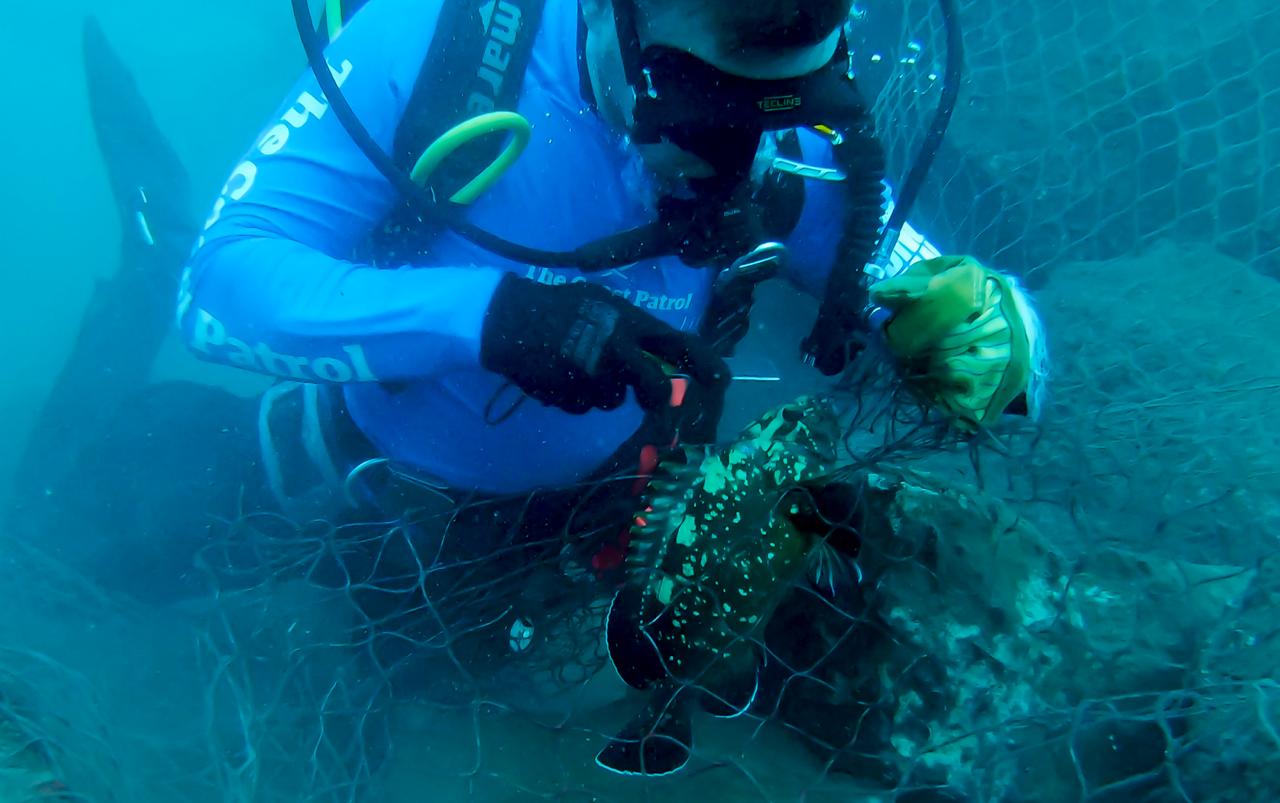
Removing a ghost net in the Mediterranean. Photo by The Coast Patrol
The rescue process began when Dr. Amir Perelberg, Director of Hamaarag (Israel’s National Ecosystem Assessment Program), spotted a torn ghost net stretching across the seaward side of the breakwater opposite Trumpeldor Beach during one of his morning swims.
Trapped within the discarded nylon mesh were dozens of crabs, fish, and a juvenile guitarfish — a vulnerable, protected ray species common to shallow Mediterranean waters. He immediately logged a report on the SeaWatch app, and SPNI’s Blue Half team confirmed the fnext day that an intervention was underway.
A Race Against Time and Tides
Mobilizing a technical diving team and waiting for safe sea conditions took six days. On Election Day at 6:00 AM, divers plunged into the water to tackle the 150-meter-long net, which extended into a designated public swimming beach where fishing is strictly prohibited. By the end of the operation, divers hauled out 30 kilograms of heavy netting. Dozens of trapped crabs and invertebrates were found inside. While many had died before being extracted, several surviving crabs were successfully freed. Divers also discovered a squid egg mass attached directly to a section of the netting. To protect the developing eggs, that portion was carefully cut away and left undisturbed on the seabed.
This operation is the seventh major ghost net removed by SPNI from Israeli waters since the start of the year following public reports via SeaWatch, highlighting that abandoned gear is a widespread issue rather than an isolated incident. “I swim three to four times a week along Tel Aviv’s breakwaters — it’s my sanctuary,” shared Dr. Perelberg. “When I spotted the long net trapping crabs, rabbitfish, and a young guitarfish, I immediately logged it on SeaWatch. The morning after it was removed, I went for my swim and saw two stingrays gliding over the exact same spot. What a relief! A huge thank you to the Blue Half team and all the volunteers.”
The Ongoing Threat of Unregulated Marine Debris
Bar Sternbach, Sea Watch and Marine Projects Coordinator at SPNI, emphasized the ongoing challenge posed by marine debris. “Time and again, SPNI and our partners are forced to clear discarded fishing gear left behind by irresponsible fishing,” Sternbach explained.
“Abandoned nets act as indiscriminate killing machines, trapping marine life. The burden of cleanup falls on environmental organizations and dedicated volunteers rather than those responsible for leaving the gear behind. Every single day a net remains in the water, local biodiversity remains at risk — especially during seasons when protected species like juvenile rays and guitarfish nurse close to shore.”
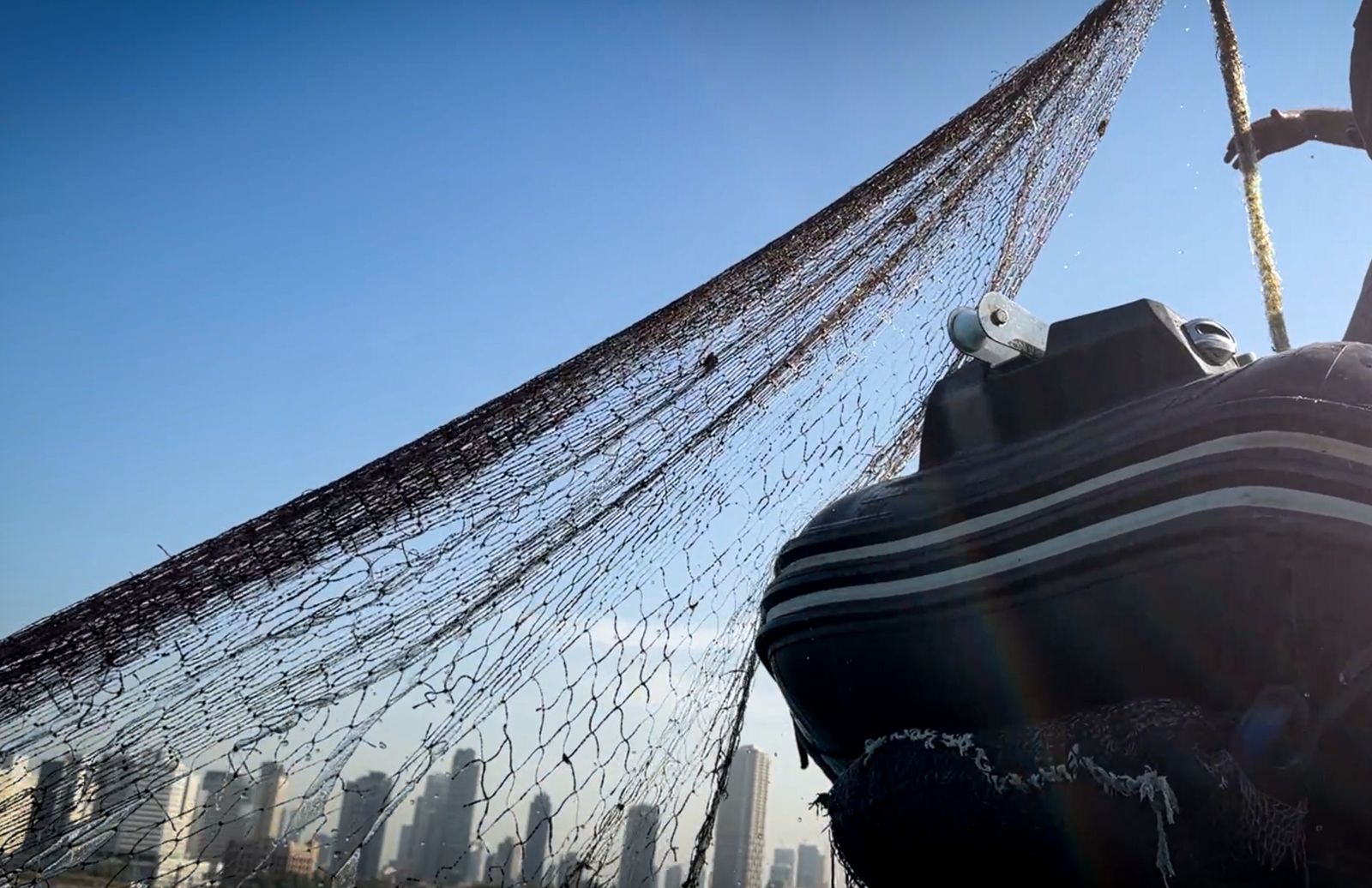
A fishing boat off Israel’s coast. Photo by Eden Cohen
Empowering Citizen Science with Sea Watch
Developed by the Society for the Protection of Nature in Israel, the SeaWatch app empowers everyday beachgoers, divers, and sailors to report marine hazards and wildlife sightings in real time across the Mediterranean Sea and the Gulf of Eilat. Since its launch, the app has achieved nearly 30,000 downloads and processed over 7,500 reports covering illegal fishing, abandoned gear, marine pollution, and injured wildlife. Every report submitted through the app is directly dispatched to relevant enforcement and rehabilitation authorities, making every marine enthusiast an active guardian of Israel’s seas.
Our ongoing marine protection projects are only possible thanks to your generous support. Together, we are safeguarding Israel’s marine wildlife, ensuring these vulnerable species remains safe and resilient for generations to come.