




19 Aug The Small Victories Saving Israel’s Nature Today, a response to Alon Tal
In a recent Times of Israel essay, one of Israel’s pioneering environmental leaders, Alon Tal, offered a sobering assessment of the environmental record of Israel’s current government. His conclusion was stark: after four years, he struggled to identify a meaningful environmental achievement and saw instead a pattern of neglect, weakened institutions, and missed opportunities.
On much of that analysis, I agree. Israel remains far behind where it needs to be on climate action, renewable energy, biodiversity protection, and environmental governance. The challenges are real, and they are serious.
Alon Tal has spent decades helping build Israel’s environmental movement, and many of us working in conservation today stand on foundations that leaders like him helped create. Because I share many of his concerns, his article stayed with me.
But I found myself arriving at a different conclusion.
Not because the problems are smaller than he describes, or because environmental advocates can afford complacency. They are not, and we cannot.
I remain hopeful because I have spent the last several years watching the Society for the Protection of Nature in Israel (SPNI) continue winning, not always the large victories but often the small ones.
The kind of victories that protect a stream before it is polluted, a coastline before it is developed, a wildlife corridor before it is severed, or a planning process before it is weakened. Harmful changes are quietly blocked, and most people never know they were being considered.
If there is one lesson I have learned from SPNI’s work, it is that environmental progress rarely arrives as a dramatic breakthrough. More often, it begins with a challenge that seems too technical, too local, or too small to attract much public attention and grows into something much larger.
Take construction waste, for example.
At first glance, construction debris seems worlds away from the environmental causes that capture public attention. Yet for decades, more than one million tons of construction waste have been illegally dumped in Israel’s open spaces every year, damaging ecosystems, polluting water sources, harming agricultural land, and imposing enormous costs on the public.
For years, many assumed the situation was unsolvable.
SPNI did not.
After more than twenty years of advocacy, the Construction Waste Law was finally passed which fundamentally changes how waste is managed, creating supervision from the moment waste is generated until it reaches approved treatment facilities.
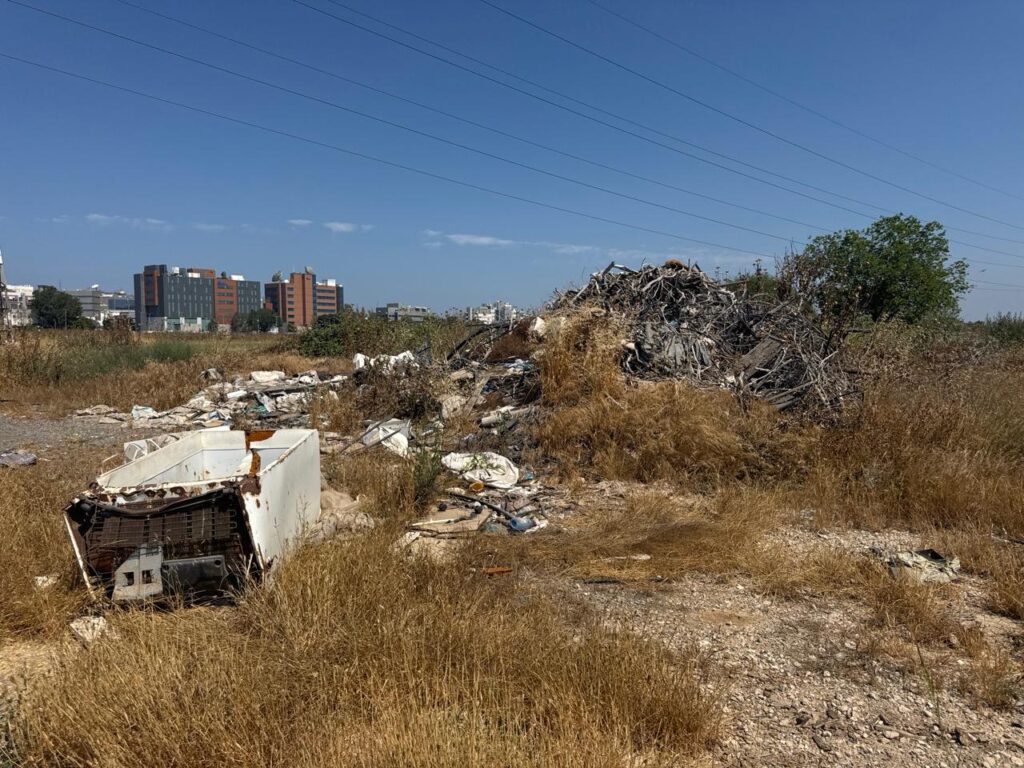
Construction waste near Ashdod. Photo by Avner Rinot
It is not an exaggeration to call this one of the most important environmental achievements of recent years.
What first appeared to be a narrow, technical issue became a major national environmental accomplishment.
The same pattern can be seen elsewhere.
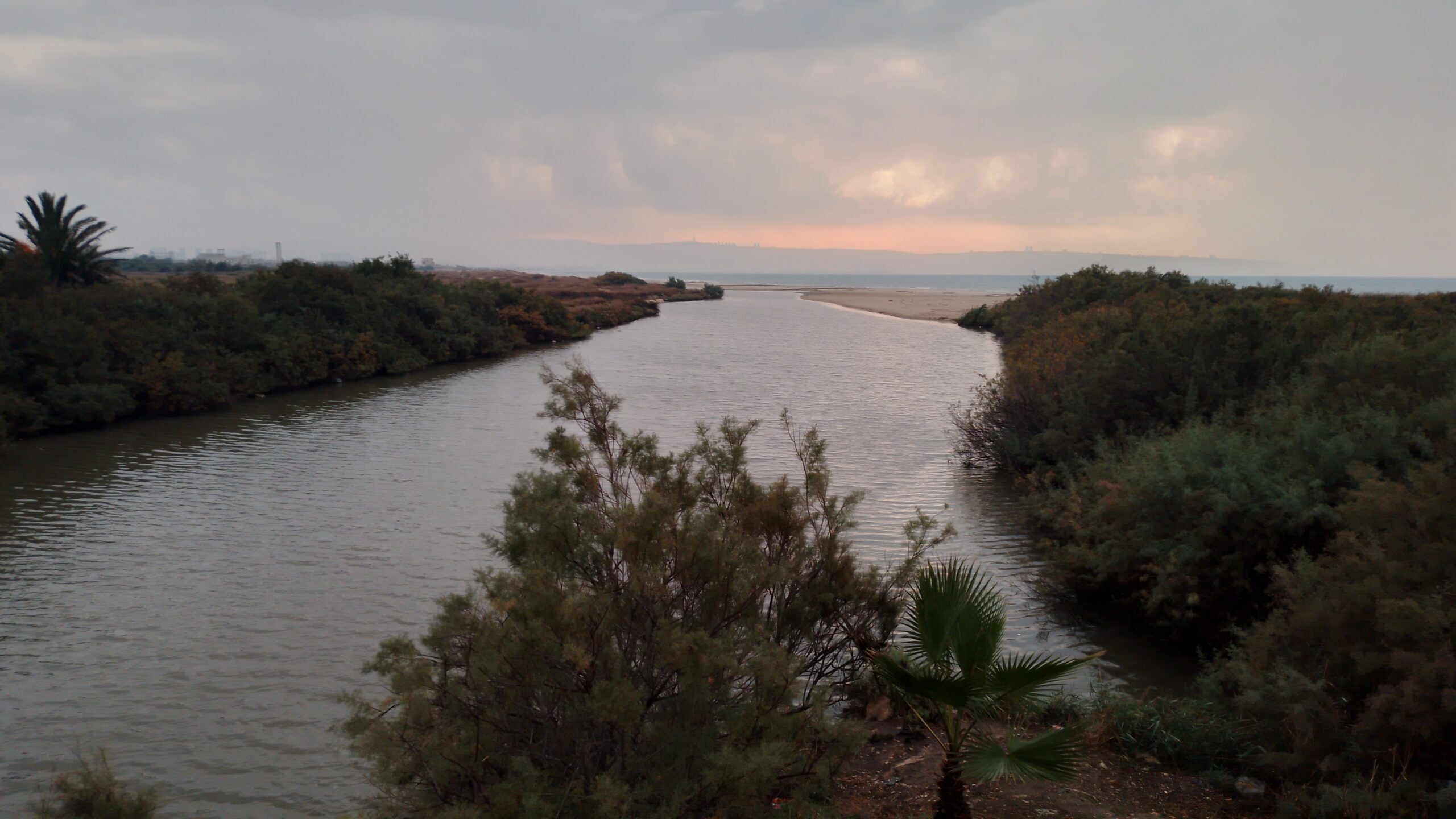
Na’aman River in Akko. Photo by Yael Hammerman-Solar
Most Israelis never heard about the legal loophole that made it easier to pollute rivers and streams than the sea. But because environmental advocates stayed focused on the details, polluters are now required to obtain permits and pay levies for polluting waterways.
Over the past year, SPNI also helped block attempts to weaken protections for beaches, nature reserves, clean air, and mature trees; defeat legislation that would have fast-tracked massive data centers at the expense of open spaces and responsible energy planning; defend environmental impact assessments; advance stronger protections for Israel’s seas; and support stronger enforcement against wildlife trafficking.
That is the paradox of environmental advocacy: success often looks like nothing happening. A stream remains clean. A harmful law never passes. A planning proposal quietly disappears.
Yet the impact can be enormous.
One of the dangers of environmental discourse is that we focus exclusively on the largest failures. Those failures deserve attention. Climate targets matter. Government priorities matter. Institutional weakness matters.
But if we focus only on what governments have failed to do, we miss an equally important story: dedicated people continue protecting Israel’s nature every day, and those efforts add up.
For more than seventy years, SPNI has combined vision with persistence, understanding that lasting environmental progress is built through countless smaller advances that accumulate over time.
I often think about the teaching from Pirkei Avot: “It is not your duty to finish the work, but neither are you free to desist from it.”
Environmentalists understand this deeply.
There will always be another threatened habitat, pollution challenge, or species requiring protection. There will always be reasons for despair. But hope is the decision to keep working toward a better reality.
If anyone is searching for evidence that progress remains possible in Israel, even during politically difficult times, they need look no further than SPNI’s recent legislative and policy achievements. They demonstrate that professional advocacy matters, persistence matters, and determined people can still make meaningful change.

A European Roller being released from the Jerusalem Bird Observatory. Photo by Noah Konopny
The challenges facing Israel’s environment are immense. Alon Tal is right about that.
But there is another truth that deserves equal attention.
Every day, dedicated people, my colleagues at SPNI, continue protecting Israel’s land, water, wildlife, and open spaces. Many of our victories are invisible to the broader public. Yet those victories, from the smallest interventions to the largest policy achievements, will help shape the country future generations inherit.
That is why I remain hopeful. Because sometimes the most important environmental successes are the ones almost nobody notices, until years later when we realize what was saved.